The giving tally, 2025
7 May 2026 · 6 min read
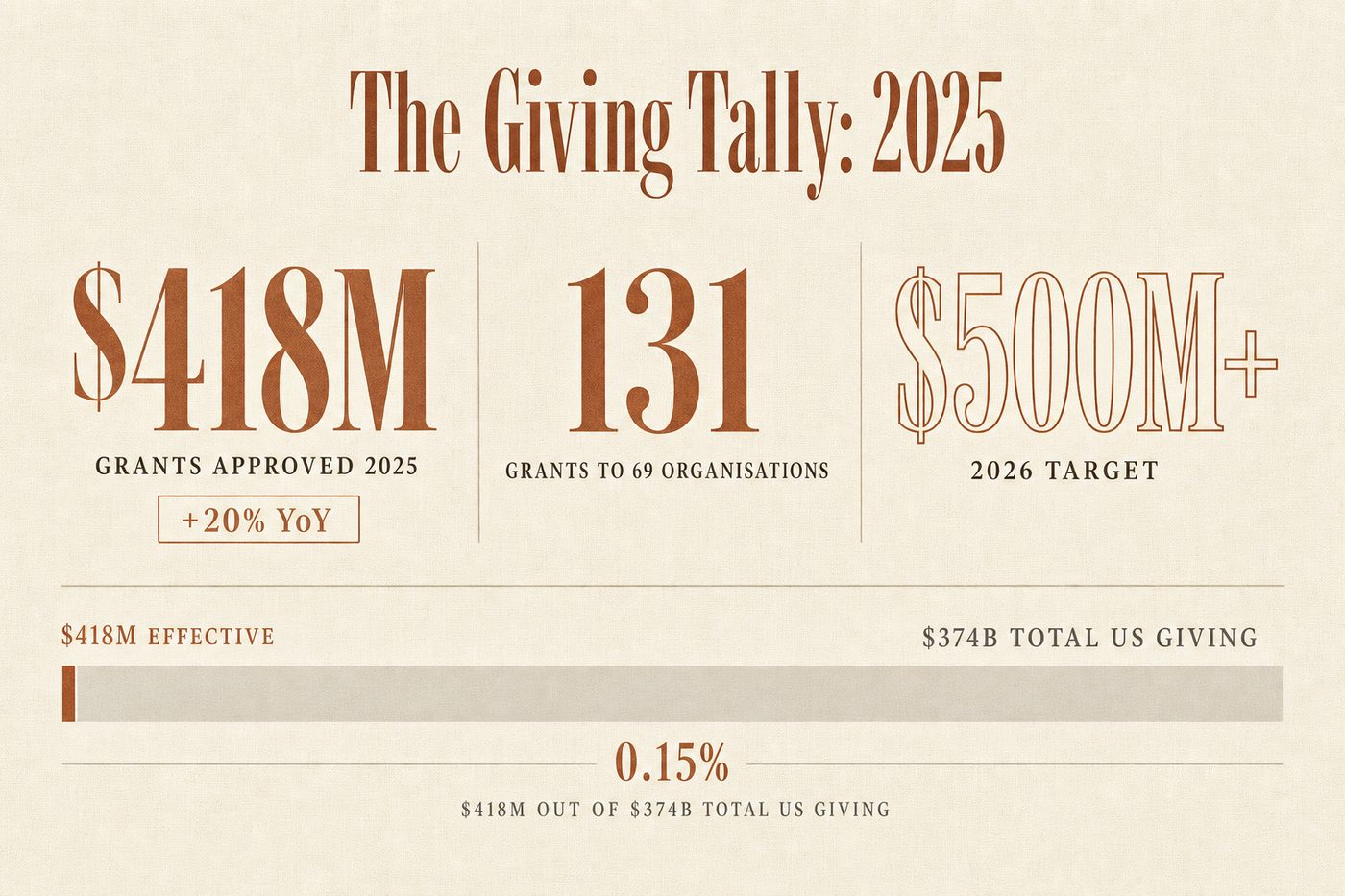
GiveWell approved $418 million in grants in 2025. That's 131 grants across 69 organisations, more than double the number of grants from the previous year and a 20% increase in total dollars. They're targeting $500 million for 2026, which would put them somewhere near the top tier of global health funders outside of governments and the Gates Foundation.
Those are big numbers. They also represent roughly 0.15% of total US charitable giving, which ran at about $374 billion in 2023 (the last year with complete Giving USA data). Effective giving is growing fast and it's still a rounding error.
That gap between what the evidence-driven community moves and what the broader charitable sector moves is the single most important number in this entire space. Everything else, the pledges, the evaluations, the intervention research, exists to close it.
What the pledgers did
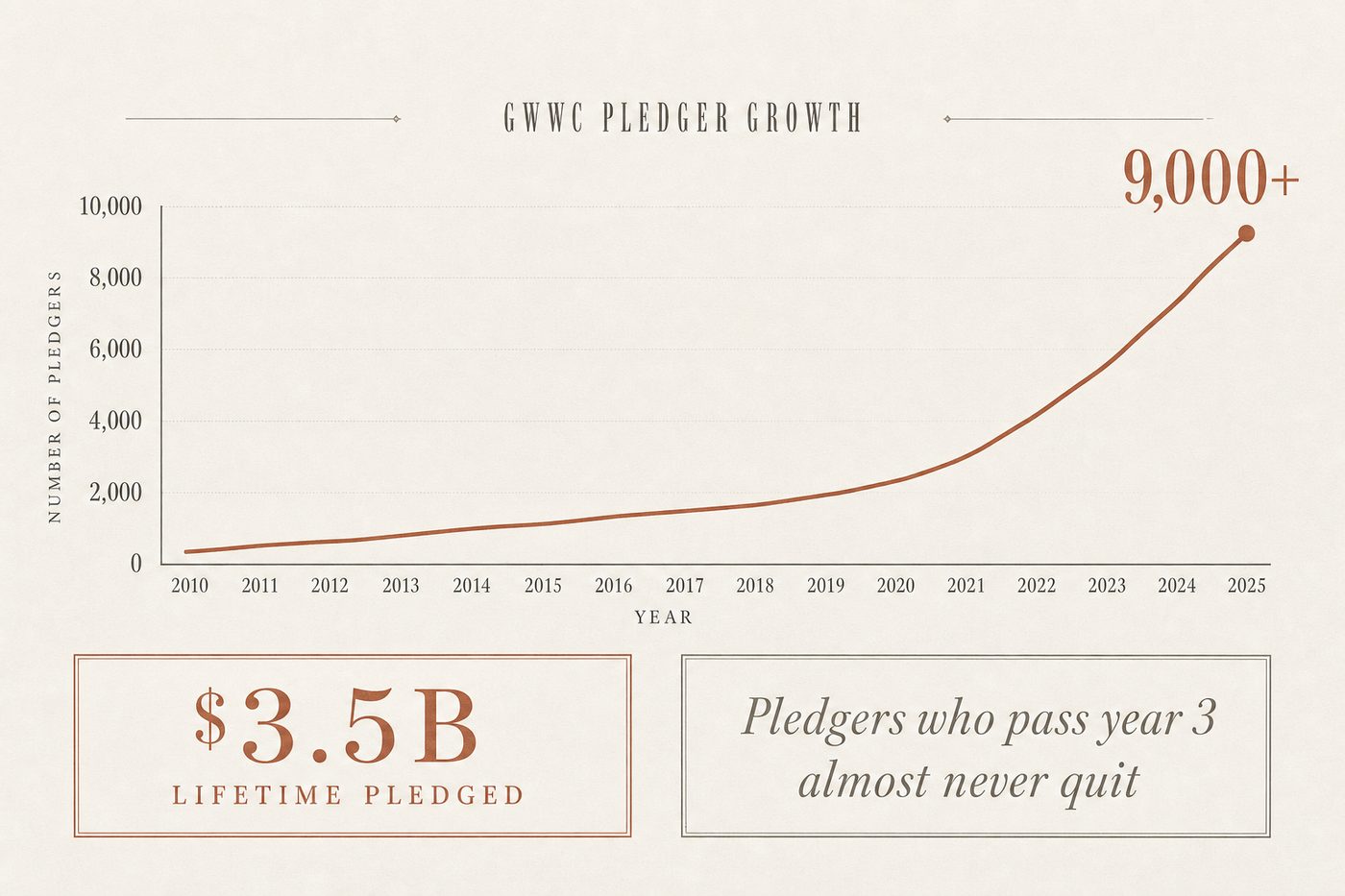
Giving What We Can passed 9,000 pledgers sometime in late 2025. Their total pledged giving now stands north of $3.5 billion in lifetime commitments, which sounds enormous until you remember these are lifetime figures spread across decades. The annual flow is harder to pin down because GWWC tracks pledges, not actual transfers, and not everyone reports.
Still: 9,000 people who've committed to giving at least 10% of their income, indefinitely, to the most effective charities they can find. The Try Giving pledge (any percentage, any timeframe) has been growing faster than the full pledge, which makes sense. Lower barrier, same direction.
The attrition data is encouraging if you're inclined to squint at it. GWWC's 2023 longitudinal study found that pledgers who make it past year three almost never quit. The habit becomes identity somewhere around month 36, and identity is sticky in ways that good intentions aren't.
Where GiveWell put the money
The headline grant from early 2026 (technically Q4 2025 fiscal) was $9.6 million to Against Malaria Foundation for net distribution in Ituri Province, DRC, expected to protect 819,000 children under five and avert roughly 5,700 deaths.
But the more interesting shift is what GiveWell is funding beyond bednets. Clubfoot treatment through MiracleFeet. Vitamin A supplementation through Helen Keller International, which they now rate at 25x their cost-effectiveness benchmark even after revising the mortality reduction estimate downward (from the historical 19% to a more conservative 1-11% range). The portfolio is diversifying because GiveWell's capacity to evaluate complex health interventions has grown, and because the most obvious bednet funding gaps have narrowed.
They also made grants for seasonal malaria chemoprevention and are funding the CHAMP trial, the largest individually randomised trial of malaria chemoprevention drugs ever conducted. This is GiveWell spending money to generate the evidence that will determine where future money should go. It's a good sign.
The animal welfare side
Do Gooder
One good decision a week
The research behind each piece takes hours. Get the next evidence-backed read every Tuesday, in 3 minutes.
Free weekly read. Unsubscribe anytime, no guilt.
Animal Charity Evaluators distributed $1.9 million in February 2026, their second-largest disbursement ever. Eleven organisations received funding. The Humane League got $85,000 and reported sparing 2.5 million additional hens from cages in the preceding six months. Sinergia Animal ($95,000) secured 23 new corporate commitments to phase out confinement systems in Latin America.
EA Funds, the Centre for Effective Altruism's grant-making arm, distributed over $50 million across all cause areas in 2024. The Animal Welfare Fund tends to move around $3-5 million annually, mostly to corporate campaign organisations and farmed animal advocacy groups in developing countries where the marginal dollar goes furthest.
UK giving in context
The Charities Aid Foundation's UK Giving Report put total charitable giving at £12.7 billion in 2023. The average standing order donor gives £30/month. The average one-off donor gives £47 but only does it twice a year. Standing orders win on annual totals by a factor of roughly four, which is the kind of boring structural insight that matters more than any individual appeal or campaign.
The proportion of UK charitable giving directed at evidence-backed, cost-effective organisations is small enough that nobody has produced a reliable estimate. CAF doesn't track it. GWWC doesn't have UK-specific flow data. The honest answer is we don't know, and the honest guess is it's below 1%.
What to make of this
The effective giving movement is at an odd stage. The infrastructure works. GiveWell's evaluation machinery is good enough that they can responsibly move half a billion dollars a year. GWWC has a pledge product that retains people. ACE has a recommendation list that moves real money to animal welfare organisations. The evidence base for top interventions is strong.
What's missing is reach. 9,000 pledgers in a world of 8 billion people, or even among the roughly 100 million English-speaking adults who could plausibly be interested, is not yet a movement that has crossed into the mainstream. The gap between $418 million and $374 billion is where the next decade of work sits.
If you're already giving, these numbers are your context. You're part of a small group doing something unusual and measurable. If you're not giving yet, the 0.15% figure is the one to sit with. The opportunity to redirect even a fraction of a percent of total charitable spending toward what actually works is, by the numbers, still wide open.
Sources used
- GiveWell "2025 Grantmaking: Record Grants, Expanded Reach, Crisis Response" (February 2026)
- GiveWell April 2026 update ($9.6M AMF grant, vitamin A estimates)
- Giving USA 2024 report (2023 giving data: $374B total US charitable giving)
- Giving What We Can pledger data and longitudinal retention study (2023)
- CAF UK Giving Report 2024 (£12.7B, standing order vs one-off data)
- Animal Charity Evaluators Recommended Charity Fund update (February 2026)
- EA Funds annual distribution data (2024)
More in The Tally