The Climate Adaptation Gap
2 May 2025 · 7 min read
Two maps, one problem
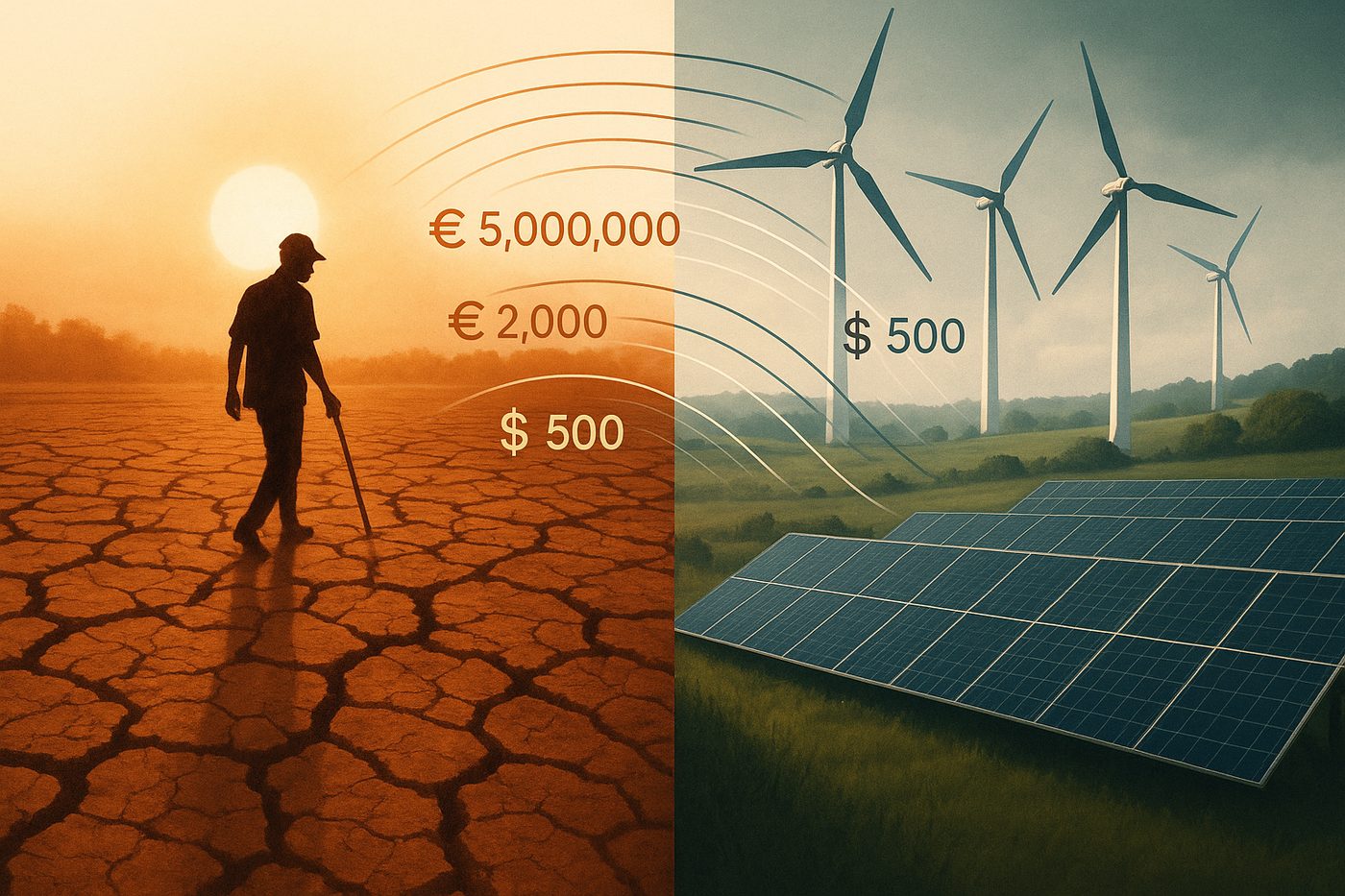
Pull up a map of where climate change is already causing measurable harm: crop failure, flood displacement, heat mortality. It lights up South Asia, sub-Saharan Africa, small island states, Central America.
Now pull up a map of where climate finance flows. It lights up Northern Europe, North America, East Asia.
The gap between these two maps is the climate adaptation deficit, and it is one of the largest misallocations of resources in global development.
The numbers
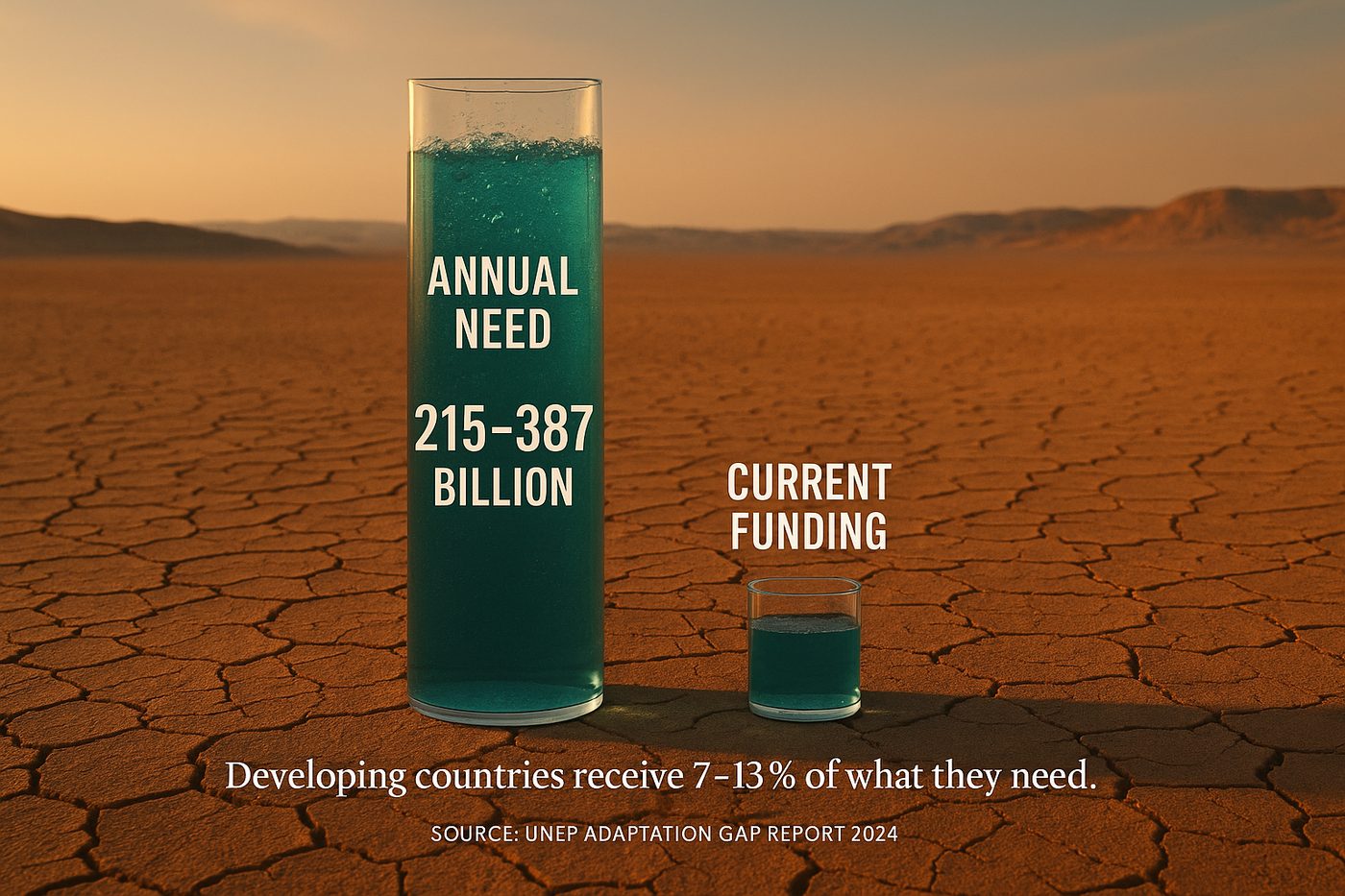
The UNEP Adaptation Gap Report 2024 estimates developing countries need 215 to 387 billion dollars per year for climate adaptation. They currently receive approximately 28 billion dollars. That is a gap of 85-93%.
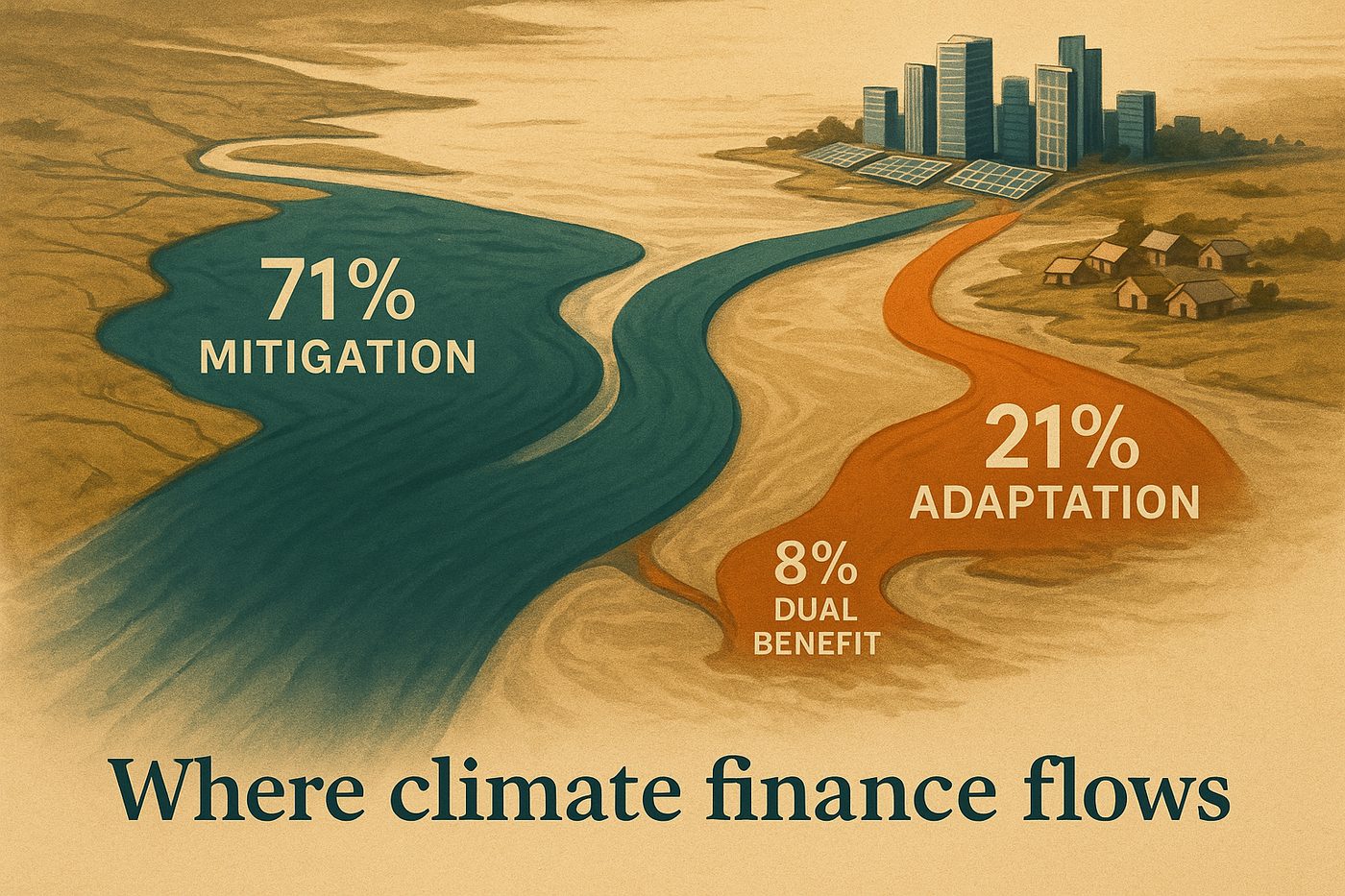
Where does the money that does flow actually go?
- 71% to mitigation (reducing future emissions): solar panels, wind farms, electric vehicles, mostly in countries that can afford to co-finance
- 21% to adaptation (coping with current impacts): flood defences, drought-resistant crops, early warning systems
- 8% dual-benefit (counts as both)
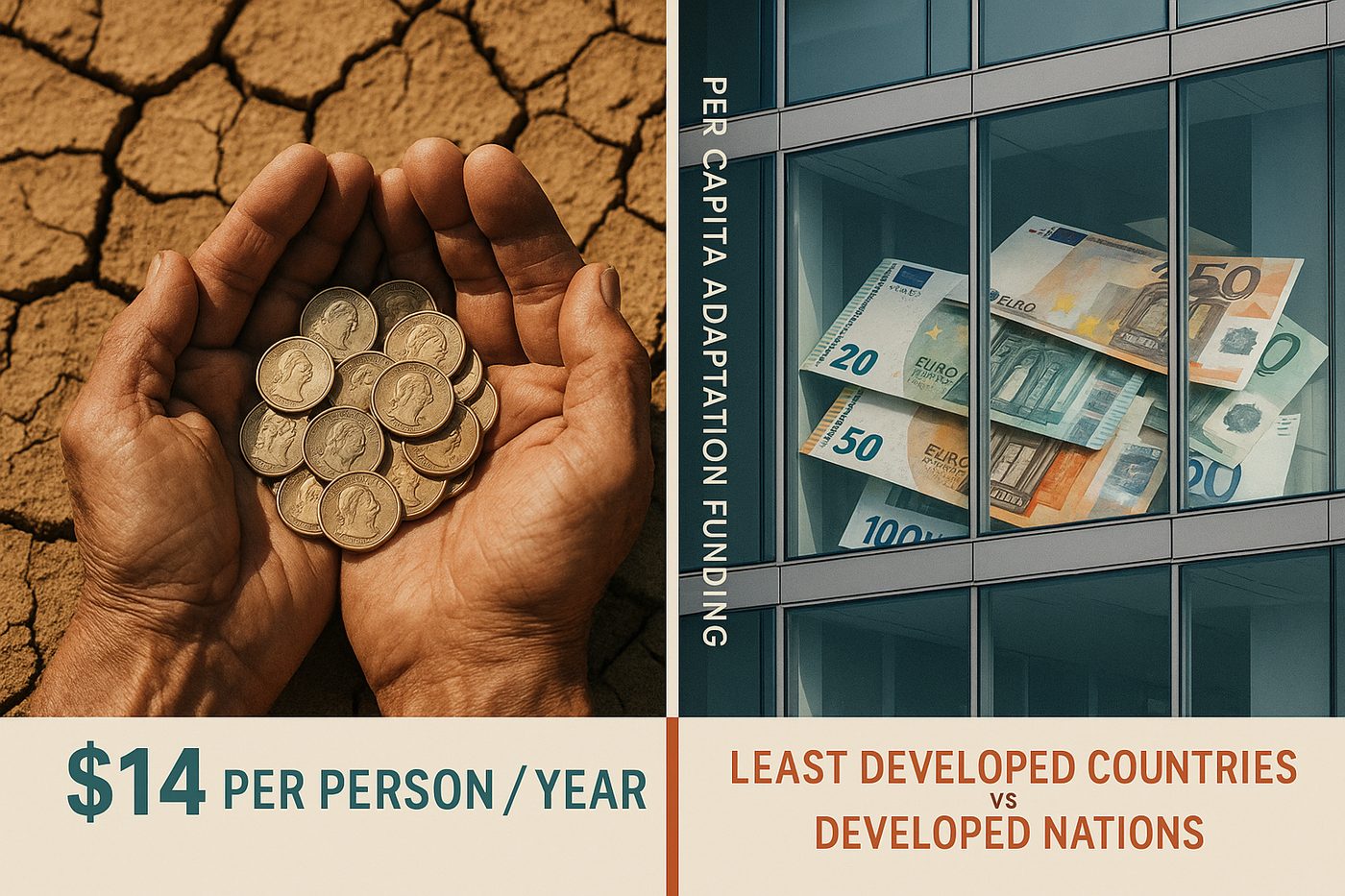
Of the adaptation funding that exists, most goes to middle-income countries with existing institutional capacity to apply for grants. The Least Developed Countries, which face the highest per-capita climate risk, receive roughly 14 dollars per person per year in adaptation finance. Bangladesh, on the front line of sea-level rise, gets less adaptation funding per affected person than Germany.
Why the gap persists
Do Gooder
One good decision a week
The research behind each piece takes hours. Get the next evidence-backed read every Tuesday, in 3 minutes.
Free weekly read. Unsubscribe anytime, no guilt.
Three structural reasons:
1. Mitigation is investable, adaptation is not
A solar farm generates electricity and revenue. An investor can model returns. A flood wall protects lives and property but generates no cash flow. Private capital flows toward mitigation because it looks like infrastructure investment. Adaptation looks like aid.
Result: 61% of climate finance comes from private sources, almost all directed at mitigation in stable economies.
2. Adaptation is local and messy
Building a wind farm is a repeatable engineering problem. Adapting to climate impacts requires understanding local geography, social systems, governance capacity, and agricultural practice. There is no single adaptation technology to scale. Every intervention is bespoke.
This makes it harder to fund at scale, harder to measure, and less attractive to large multilateral institutions that prefer standardised programmes.
3. The people who need it cannot lobby for it
Climate adaptation is most needed by subsistence farmers in Chad, fisher communities in Bangladesh, pastoralists in Kenya. These populations have minimal representation in the forums where climate finance decisions are made. The Paris Agreement's adaptation provisions are weaker than its mitigation targets precisely because the countries that wrote the agreement are the ones that need adaptation least.
What works in adaptation
Despite the funding gap, there are proven interventions:
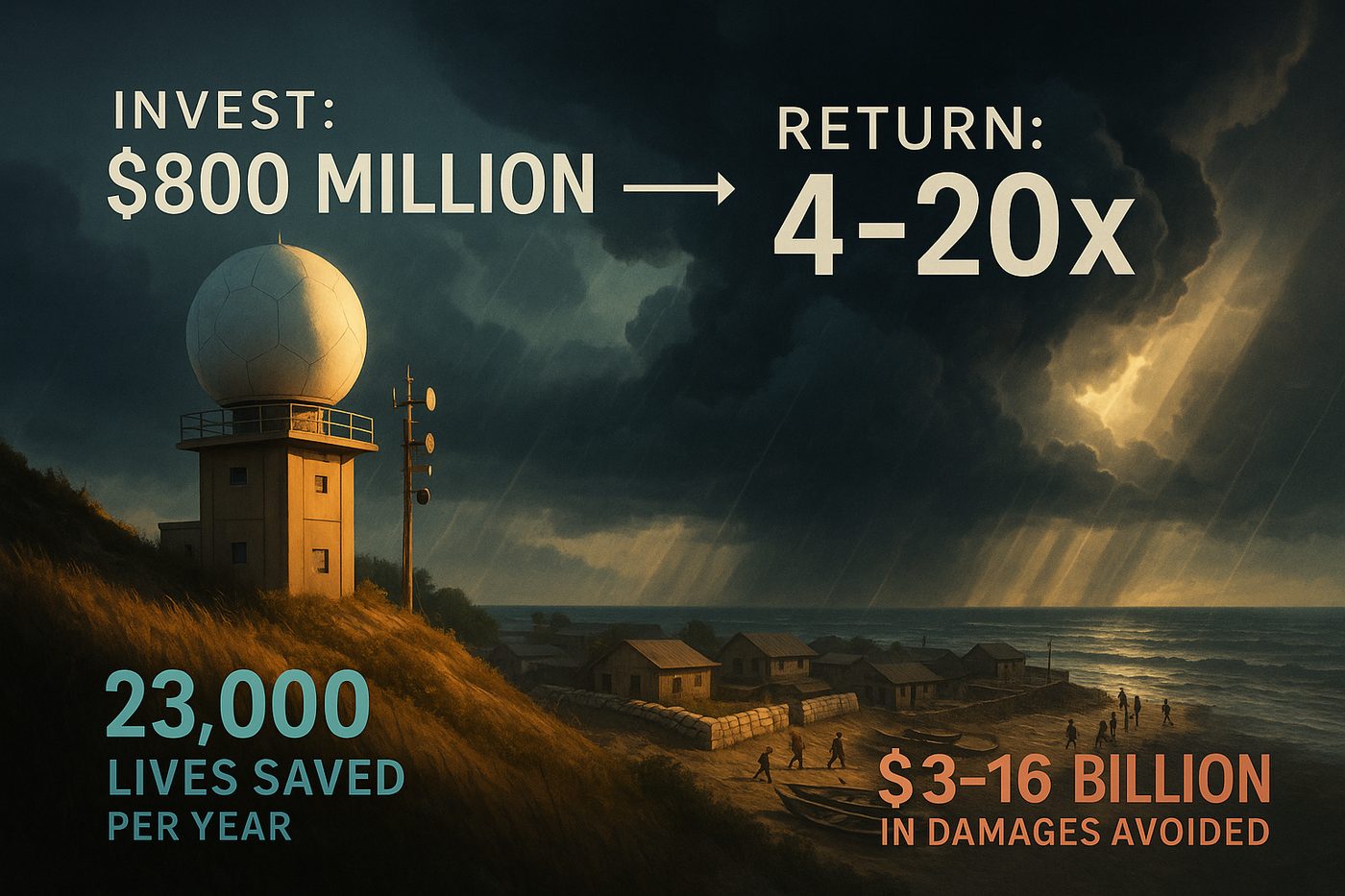
Early warning systems: The Global Commission on Adaptation estimates that investing 800 million dollars in early warning systems for developing countries would save 23,000 lives per year and avoid 3 to 16 billion dollars in annual damages. Cost-benefit ratio: 4-20x.
Drought-resistant crop varieties: CGIAR-bred drought-tolerant maize varieties increase yields by 20-30% in drought years across sub-Saharan Africa. Development cost per variety: roughly 10 million dollars. Benefit across the continent: billions in preserved food security.
Mangrove restoration: Mangroves provide coastal flood protection equivalent to 65 billion dollars per year globally. Restoring them costs 10,000 to 50,000 dollars per hectare and protects communities that cannot afford concrete sea walls.
Index insurance for smallholders: Satellite-triggered crop insurance pays out automatically when rainfall drops below a threshold. No claims process, no middlemen. Costs 5 to 15 dollars per farmer per season. Prevents the asset sales and debt spirals that lock families into poverty after climate shocks.
Where your money goes furthest
If you want to direct giving toward climate adaptation rather than mitigation:
High-confidence options:
- GiveDirectly Climate program: Cash transfers to communities hit by climate disasters. Rigorous evidence base (500+ studies on cash transfers). Recipients use funds for adaptation without the overhead of programme design.
- BRAC: The world's largest NGO, operating in 11 countries most vulnerable to climate change. Runs integrated adaptation programmes combining microfinance, agriculture extension, and disaster preparedness. Strong track record, enormous scale.
Emerging options (less evidence, higher potential):
- Practical Action: Specialises in technology-based adaptation for low-income communities. Early warning systems, flood-resilient housing, solar irrigation.
- WaterAid: Climate change is primarily a water crisis for the poorest. Their programmes in South Asia and sub-Saharan Africa build climate-resilient water infrastructure.
The opportunity
Climate adaptation is where global health was 20 years ago: massive need, proven interventions, almost no funding. The organisations working in this space are funding-constrained in ways that top mitigation projects are not.
The counterfactual case is strong. Your money to adaptation is unlikely to be displaced by private capital (which flows to mitigation) or by government spending (which prioritises domestic concerns). It fills a gap that the market cannot close and that politics has not closed.
The people who will suffer most from climate change did the least to cause it and have the least voice in deciding how to respond. The map is clear. The money just needs to follow it.
More in The Map