The animal welfare gap
27 April 2026 · 7 min read
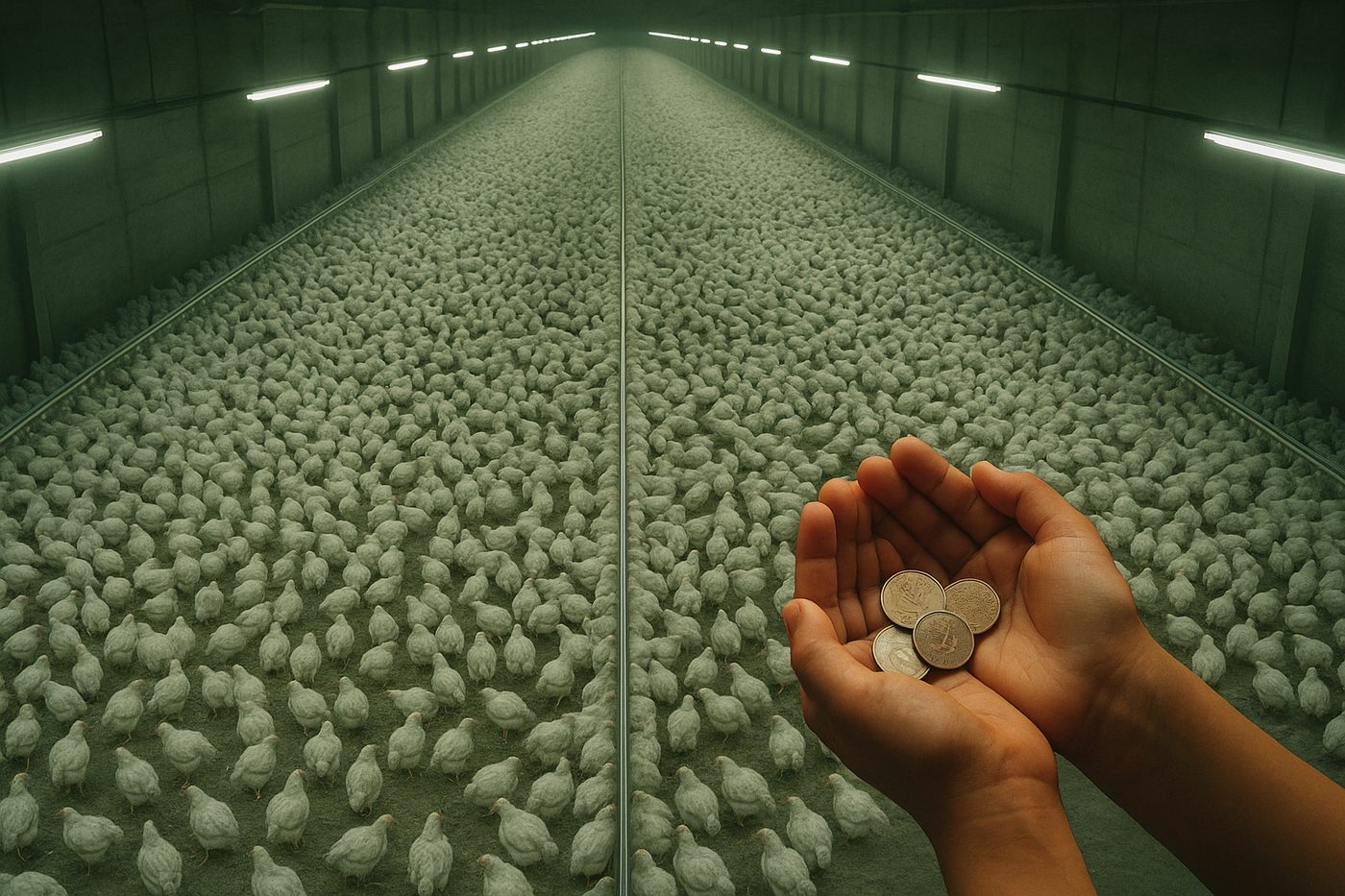
Roughly 80 billion land animals are slaughtered for food each year. Add farmed fish and the number reaches into the trillions. By any measure of scale, animal suffering is the largest ethical problem most people never think about when they think about charity.
And yet: animal welfare receives roughly 3% of US charitable giving and roughly 2% in the UK (Giving USA, 2024; CAF UK Giving Report, 2024). The vast majority of that goes to pet shelters and wildlife conservation, not to the factory-farmed animals that represent 99% of animals in human care. The gap between the scale of the problem and the funding directed at it is, by some analyses, the largest in all of philanthropy.
The numbers
Scale. The FAO estimates roughly 80 billion land animals are slaughtered annually for food (2023 data). Of these, approximately 70 billion are chickens, most raised in factory farm conditions. The Sentience Institute's 2024 analysis estimates that 74% of farmed land animals and 99% of farmed animals including fish live in factory farm conditions: confined spaces, minimal enrichment, routine mutilations without anaesthesia, and slaughter at a fraction of natural lifespan.
Funding. Total US charitable giving to animal causes was roughly 16 billion dollars in 2023 (Giving USA). Sounds substantial until you break it down. Animal Charity Evaluators' 2024 analysis found that roughly 66% goes to pet shelters, 20% to wildlife and habitat conservation, and roughly 3-5% goes to organisations working on farmed animal welfare. That's roughly 500 to 800 million dollars for the cause area affecting 80+ billion animals.
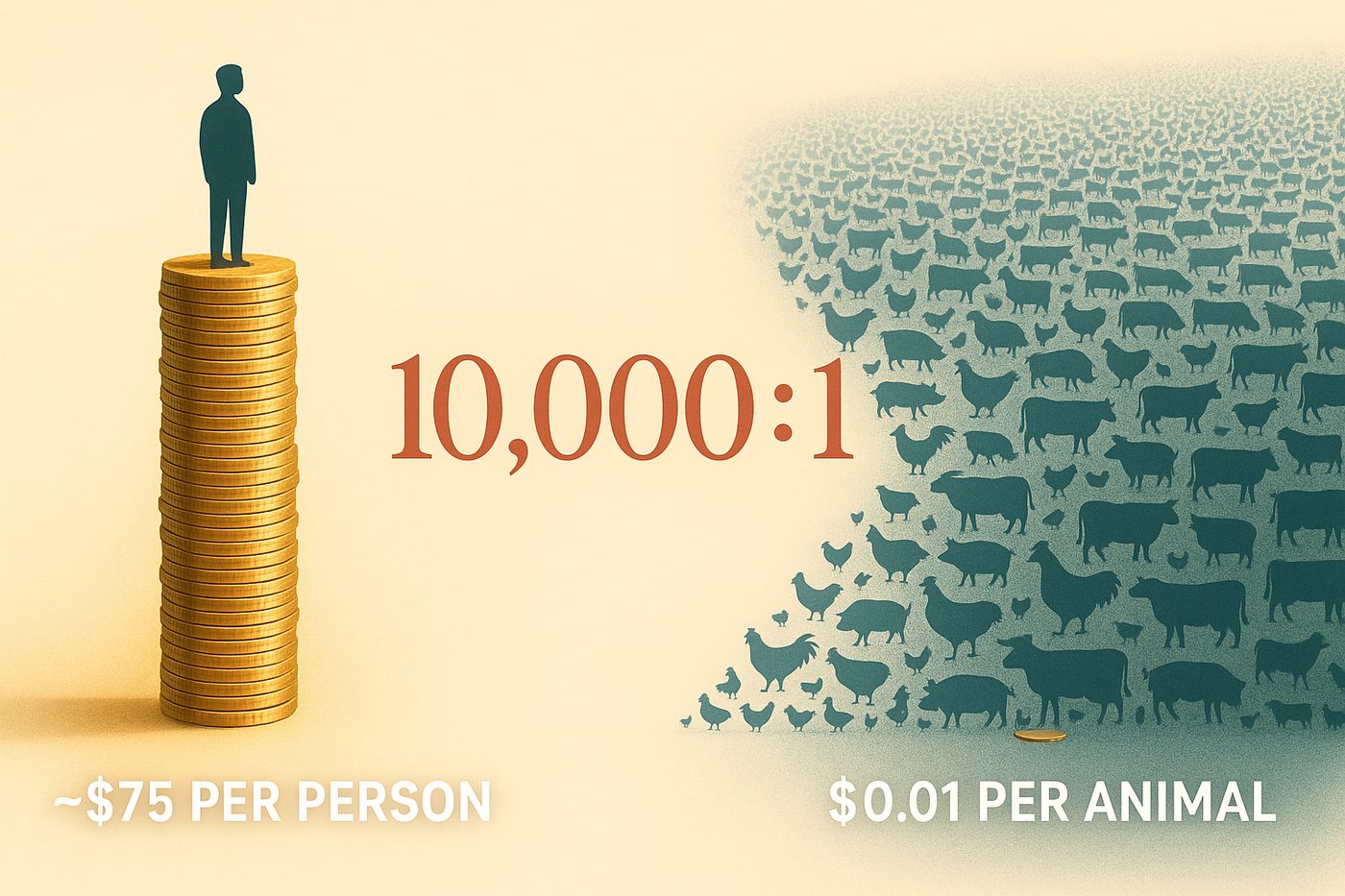
Comparison. Global health philanthropy: roughly 50 to 60 billion dollars per year (including ODA) addressing a population of roughly 700 million in extreme poverty. Farmed animal welfare: roughly 500 to 800 million dollars per year addressing a population of 80+ billion. Per-capita funding: global health receives roughly 70 to 85 dollars per person affected. Farmed animal welfare receives roughly 0.006 to 0.01 dollars per animal affected. The ratio is approximately 10,000 to 1.
Why the gap exists
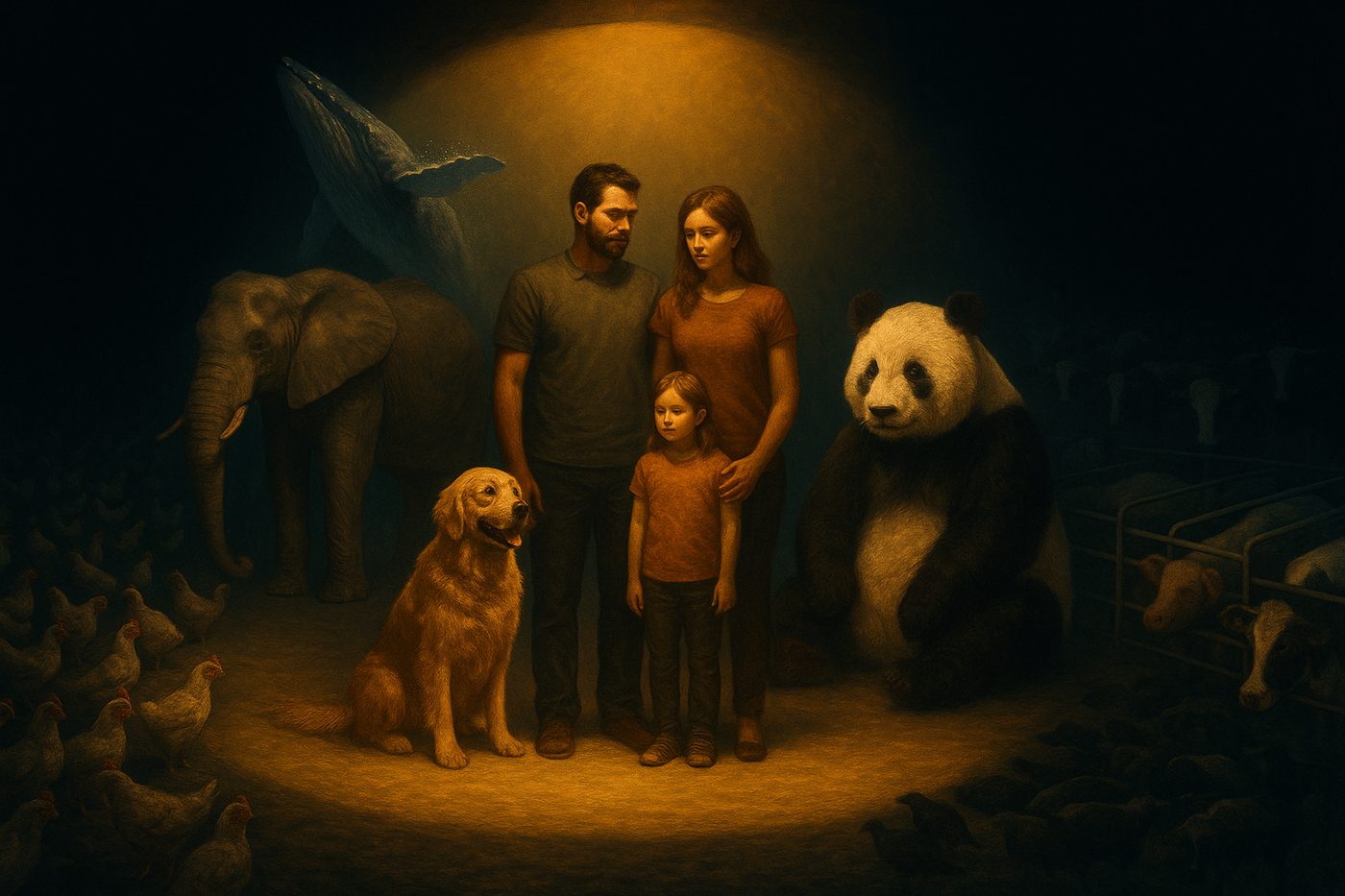
Moral circle boundaries. Most people's moral circle includes humans and charismatic wildlife (elephants, whales, pandas) but excludes farmed animals. The psychologist Steve Loughnan's "meat paradox" research (2014) documents how people simultaneously care about animals and eat them by psychologically dissociating the animal from the food. This dissociation extends to giving: factory farming is invisible in a way that human poverty isn't.
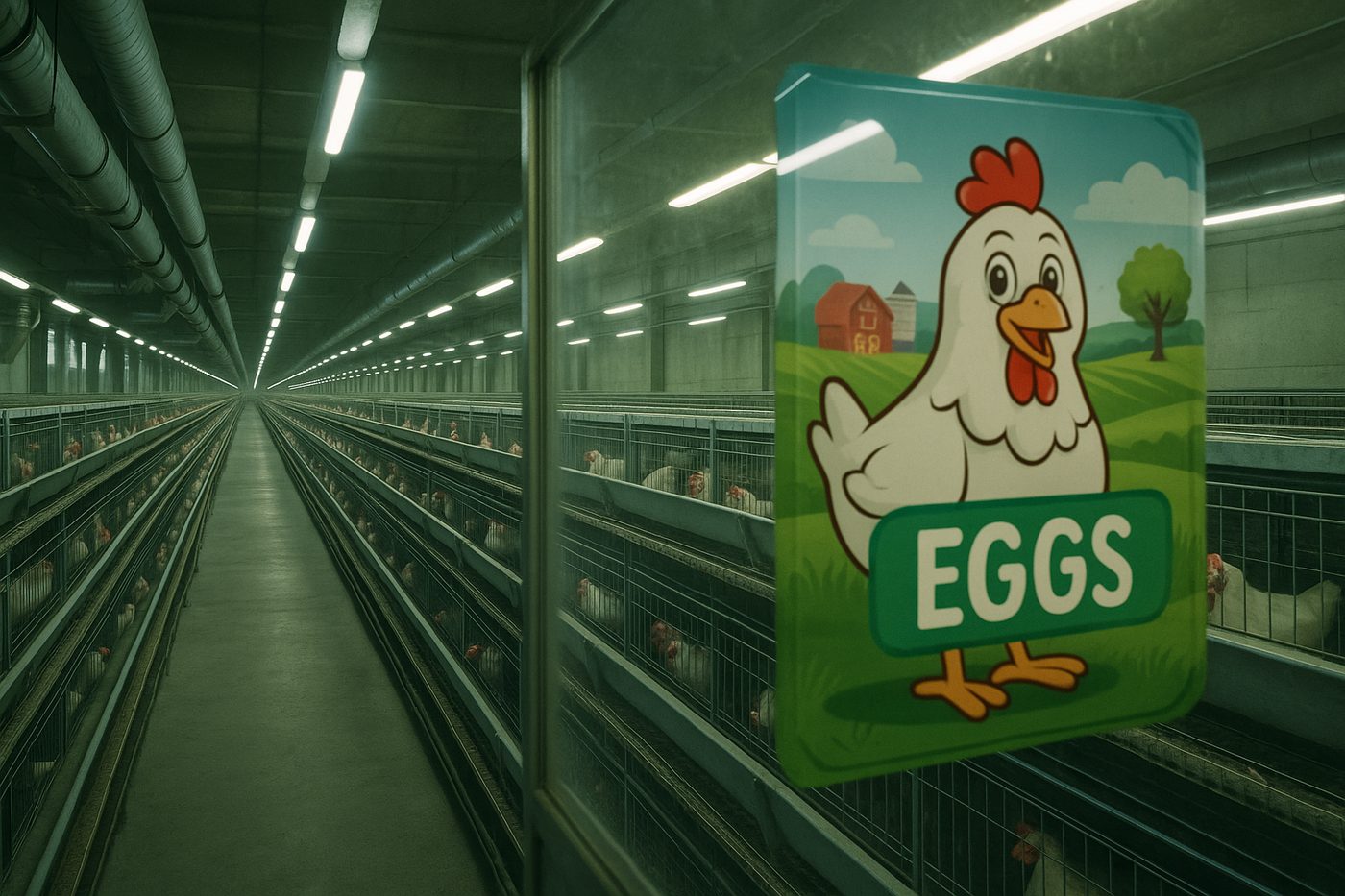
Visibility. Factory farms are deliberately hidden from public view. Ag-gag laws in multiple US states and proposed UK equivalents criminalise undercover filming in agricultural facilities. The Sentience Institute's 2024 survey found that only 31% of US adults believe factory farming is a "major problem," despite 77% opposing it in principle when shown standard industry practices.
Cause area prestige. In effective altruism circles, animal welfare is taken seriously as a cause area. In mainstream philanthropy, it's often dismissed as a niche concern. The Rethink Priorities 2024 cause area prioritisation analysis rated animal welfare as the most neglected cause area relative to its scale, precisely because mainstream philanthropy largely ignores it.
What the evidence-based organisations recommend
Do Gooder
One good decision a week
The research behind each piece takes hours. Get the next evidence-backed read every Tuesday, in 3 minutes.
Free weekly read. Unsubscribe anytime, no guilt.
Three organisations systematically evaluate animal welfare charities using evidence-based methods comparable to GiveWell's approach for global health.
Animal Charity Evaluators (ACE). The closest equivalent to GiveWell for animal welfare. ACE publishes annual top charity recommendations based on cost-effectiveness analysis, organisational strength, and room for more funding. Their 2024 top charities include The Humane League (corporate cage-free campaigns), the Good Food Institute (alternative protein research), and Faunalytics (research to improve advocacy effectiveness).
Open Philanthropy. The largest institutional funder of farm animal welfare, allocating roughly 200 million dollars per year. Their strategy focuses on three areas: corporate campaigns for improved welfare standards, alternative protein development, and policy reform. Open Philanthropy's funding dwarfs individual donor contributions, which creates both an opportunity (individuals can fund what Open Phil doesn't) and a coordination challenge.
Founders Pledge. Recommends animal welfare organisations as part of their cause area portfolio, with a particular focus on corporate campaign organisations that achieve policy changes affecting millions of animals per campaign.
The corporate campaign model
The most measurably successful approach to farm animal welfare improvement has been corporate campaigns: pressuring major food companies to adopt higher welfare standards.
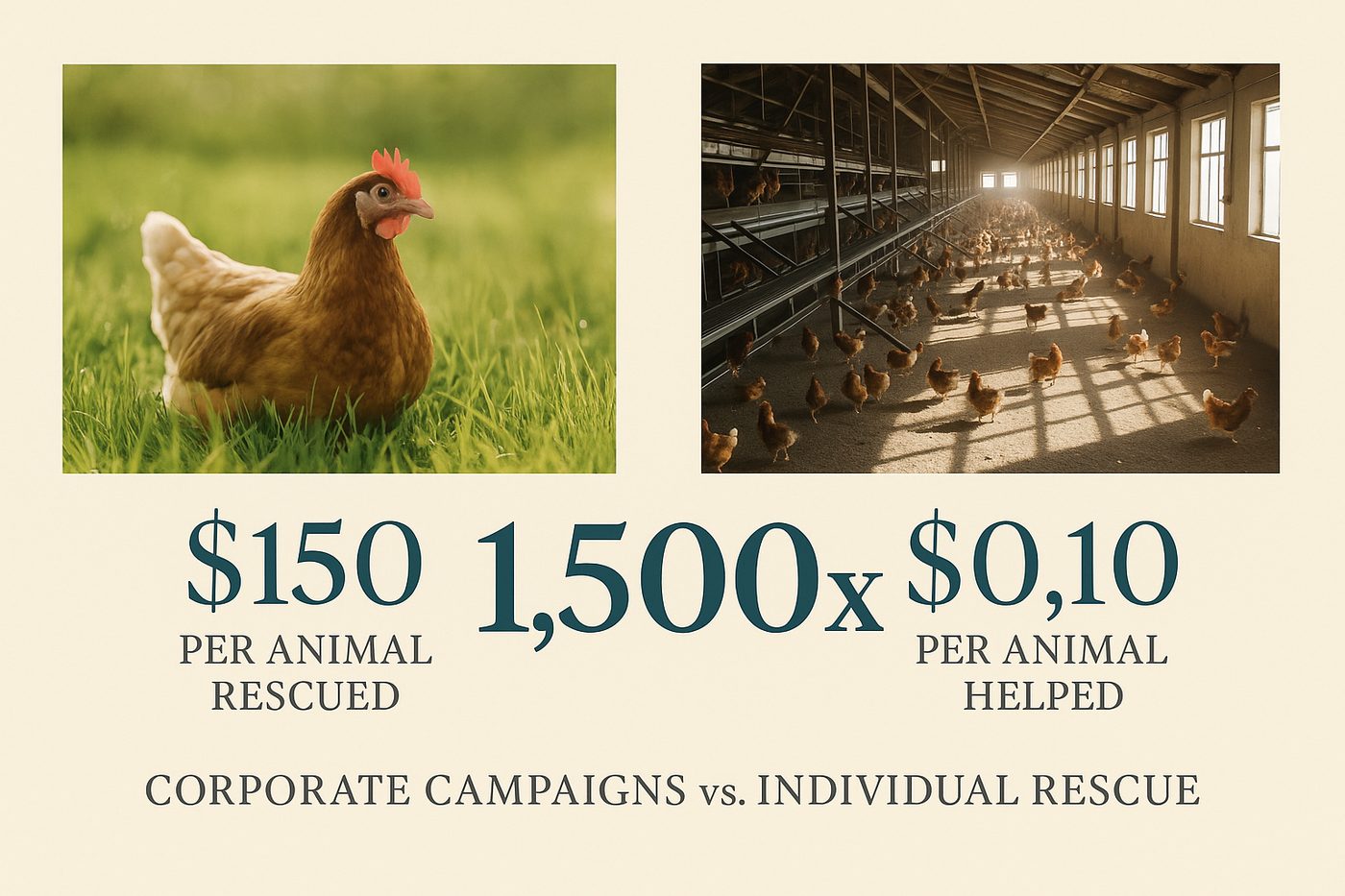
The Humane League's Open Wing Alliance has secured cage-free egg commitments from over 2,000 companies globally since 2016. Each commitment affects millions of hens. The Humane League estimates that their campaigns have improved conditions for roughly 200 million animals at a cost of roughly 5 to 50 cents per animal affected.
For comparison: rescuing a single animal from a factory farm costs roughly 50 to 200 dollars (based on sanctuary costs). A corporate campaign affecting a million animals at 10 cents per animal is 500 to 2,000 times more cost-effective per animal helped. This is why the evidence-based animal welfare community focuses overwhelmingly on systemic change rather than individual animal rescue.
The alternative protein angle
The Good Food Institute's theory of change is different: rather than improving welfare within animal agriculture, make animal agriculture unnecessary by developing competitive plant-based and cultivated meat alternatives.
The alternative protein market grew to roughly 8 billion dollars in 2023 (GFI market data), but has plateaued after rapid early growth. Cultivated meat remains pre-commercial at scale. The long-term thesis is strong (if alternatives become cheaper and tastier than conventional meat, the market shifts without requiring moral persuasion), but the timeline is uncertain.
GFI's cost-effectiveness is harder to evaluate than corporate campaigns because the impact depends on market dynamics over decades rather than measurable policy changes. Founders Pledge and Open Philanthropy both fund GFI on a "high-expected-value, high-uncertainty" basis.
For your giving
This section is more personal than most because animal welfare raises genuine moral questions that reasonable people disagree on. Three positions, all defensible:
"I care about this and want to fund it." ACE's top charities are the evidence-based picks. The Humane League for corporate campaigns, GFI for alternative proteins, Faunalytics for improving the evidence base. Even small donations matter because the space is so underfunded that marginal dollars have unusually high impact.
"I care but prioritise human welfare." A reasonable position. GiveWell's moral weights framework explicitly addresses cross-species comparison: they weight human welfare much more heavily than animal welfare in their models. If you follow GiveWell's framework, global health is a better use of your marginal dollar. But you can do both: a portfolio approach that allocates 80% to global health and 20% to animal welfare is common among effective altruism-aligned donors.
"I'm not sure animals matter morally in the same way." Also reasonable, and philosophically defensible. But consider: even if you assign very low moral weight to animal suffering (say, 1% of human suffering), the sheer scale (80 billion+ animals) and the extreme funding gap (10,000:1 per-capita) mean that animal welfare donations may still produce more welfare per dollar than many human-focused charities. The maths doesn't require you to value animals equally. It just requires you to value them at all.
One sentence
Animal welfare is the most underfunded cause area relative to its scale, and the most effective animal welfare organisations improve conditions for millions of animals at pennies per animal through corporate campaigns and systemic change.
Sources used: Giving USA animal cause giving data (2024), CAF UK Giving Report (2024), FAO livestock statistics (2023), Sentience Institute factory farming prevalence estimates and public opinion survey (2024), Animal Charity Evaluators top charity recommendations and cost-effectiveness analysis (2024), Open Philanthropy farm animal welfare grantmaking data (2024), Rethink Priorities cause area prioritisation analysis (2024), Good Food Institute market data (2024), The Humane League Open Wing Alliance campaign data (2024), Founders Pledge animal welfare cause area report (2024), Loughnan "The Meat Paradox" (Appetite, 2014). Full links in the planning doc.
More in The Map